The old Sewickley Bridge
The bridge came down.
The top stayed.
At Broad and Bank, a piece of the 1911 crossing begins another walk through the village.
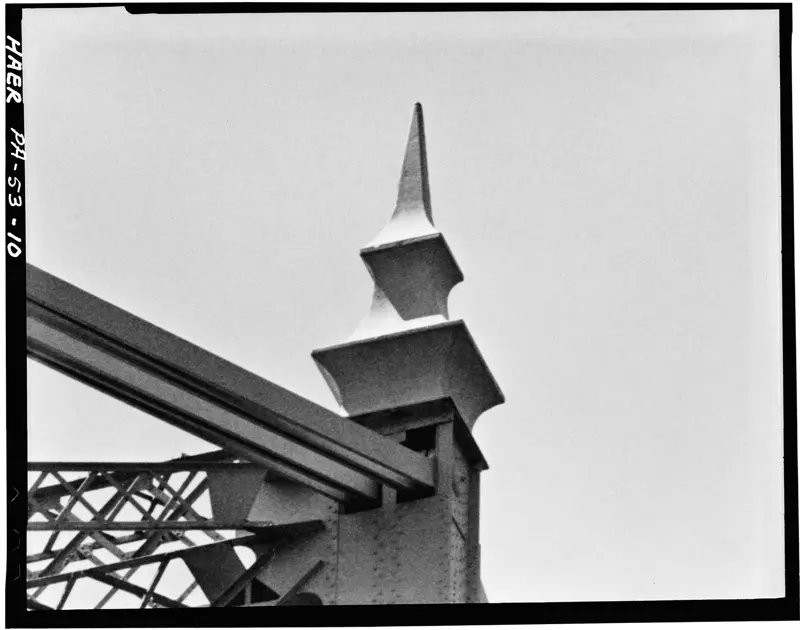
The steel finial at Broad and Bank streets once stood high above the Ohio River. It belonged to the first Sewickley Bridge, which opened on September 19, 1911. Today it marks the beginning of the Historical Society’s village walking tour.
The crossing took years of argument before construction began. PennDOT’s historical record traces an early campaign to an 1894 meeting in a Sewickley home. Supporters wanted a free bridge in place of ferry journeys that could become unreliable in winter. Fort Pitt Bridge Works eventually built the steel superstructure, connecting the roads on the two sides of the river.
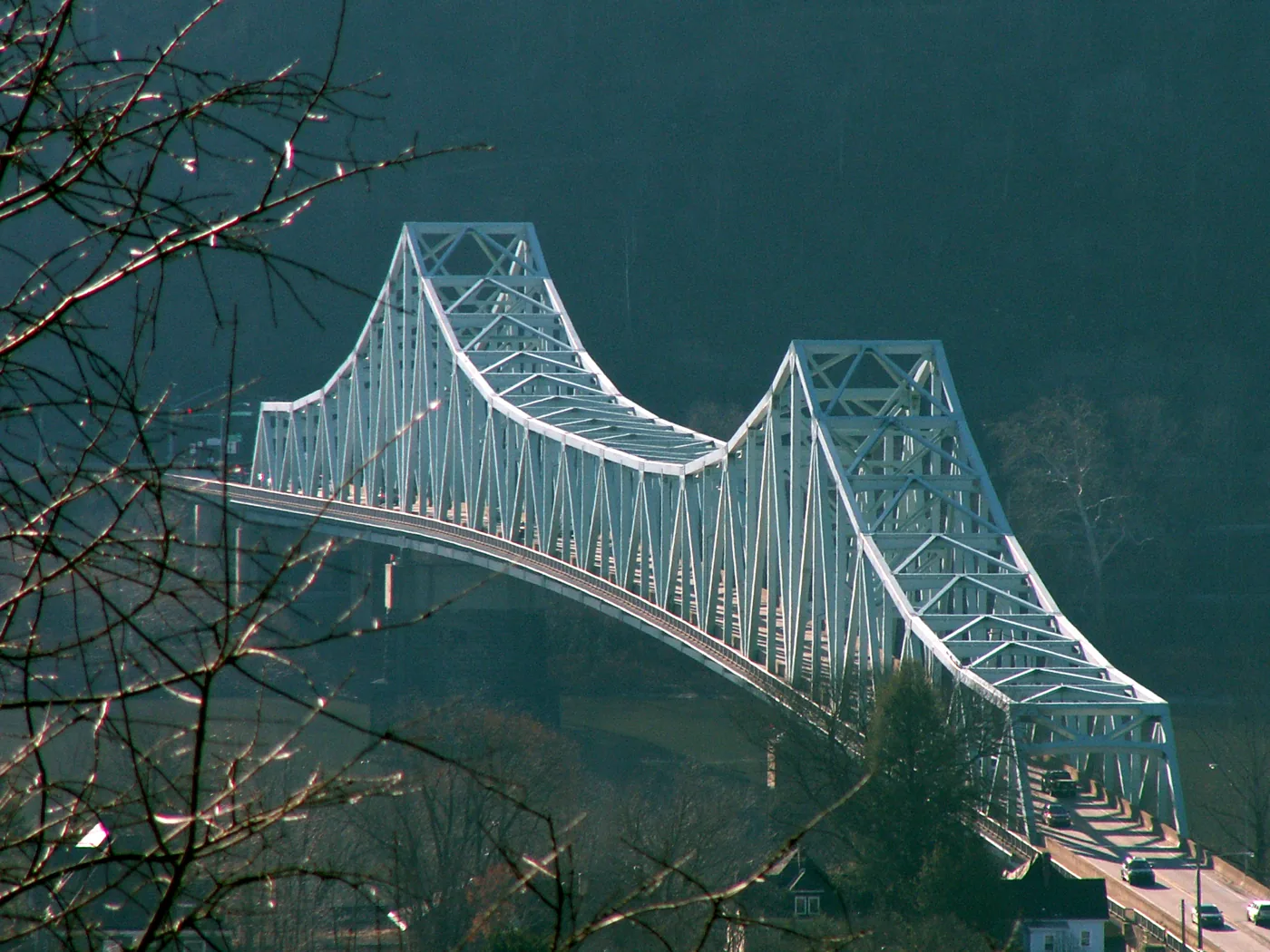
When that bridge was replaced, its removal became an engineering operation of its own. A newspaper supplement published for the new bridge’s opening described the old structure being taken apart piece by piece. The exception was its 350-foot center span: on July 9, 1980, workers lowered it intact onto two barges and floated it away.
The replacement opened on October 21, 1981, after seventeen months without the crossing. It retained the old bridge’s basic outline, and the two original river piers were reconstructed and adapted to support the wider new span.

The finials survived through a different kind of work. Sewickley Valley Historical Society credits its preservation effort with saving all four from the original bridge. One now stands close enough to examine from the street, an architectural detail that was once seen from far below.
Before demolition, the Historic American Engineering Record photographed the old bridge, including the view above of the pinnacle over its third pier. The photograph returns the surviving shape to the structure it crowned for nearly seventy years.
Sources and photograph
This feature draws on historical records and published reporting. Current walking directions come from the Historical Society.
- Sewickley Valley Historical Society: current village tour and Broad/Bank starting point
- The Society’s preservation record: saving all four bridge finials
- PennDOT, Historic American Engineering Record PA-53, February 1978: transcription hosted by Bridges and Tunnels of Allegheny County and Pittsburgh
- Coraopolis Record / Sewickley Herald supplement, October 21, 1981, page 3A: opening, dismantling and reused river piers; reproduced by Bruce Cridlebaugh
- Ron Lowe, July 1979, pinnacle at pier 3: HAER PA-53-10, Library of Congress; no known restrictions recorded for the collection